Guide · 5 min read
How to Jump Start a Car Safely, Step by Step
The order of the cables matters. Follow these steps, know when not to jump start and when to call for a professional boost.
On this page
By MyTowPublished 5 min read
Key takeaways
- Connect the last black clamp to unpainted metal on the dead car, not to the dead battery's negative post.
- Do not jump start a cracked, leaking, swollen or frozen battery.
- Check the owner's manual first: hybrids, electric vehicles and some modern cars have specific jump points or restrictions.
- After a start, drive to recharge and have the battery tested.
Before you start
Jump starting is routine when done correctly, but sparks near a battery are a real hazard. If you are unsure at any point, a professional boost with proper equipment is safer.
- Park the cars close enough for the cables to reach without touching
- Turn both vehicles off, set parking brakes and take the keys out of the ignition
- Switch off lights, radio and other accessories
- Look at both batteries: do not proceed if either is cracked, leaking, swollen or frozen
- Check the manual for the correct jump points
The correct cable order
Connecting the last clamp to metal rather than to the dead battery keeps any spark away from battery gases.
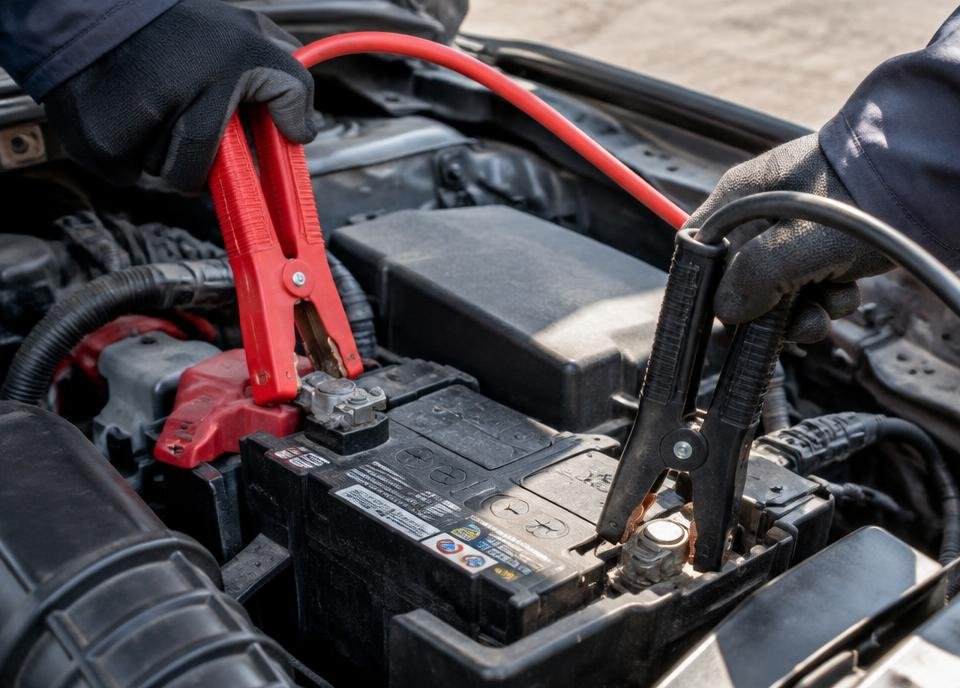
- Connect one red clamp to the positive (+) terminal of the dead battery
- Connect the other red clamp to the positive (+) terminal of the donor battery
- Connect one black clamp to the negative (−) terminal of the donor battery
- Connect the last black clamp to unpainted, bare metal on the dead car's engine block or frame, away from the battery and moving parts
- Start the donor vehicle and let it run for a few minutes
- Try to start the dead vehicle; if it does not start, wait a few more minutes and try again
- Once it runs, remove the clamps in reverse order, without letting clamps touch each other
When not to jump start
- The battery is cracked, leaking, bulging or frozen
- There is a strong rotten-egg smell or visible corrosion that covers the terminals
- Your manual warns against jump starting, or the vehicle is an electric vehicle with specific instructions
- You are on a highway shoulder or in traffic: get safe and request help instead
After the engine starts
Do not switch the engine off right away. Drive for a while, ideally a continuous trip rather than short hops, so the alternator can recharge the battery. Then have the battery and charging system tested, especially if the battery is more than a few years old or has died before.
If it still will not start
If the engine does not respond after several minutes of charging, the battery may be failing, the cables may be poorly connected, or the problem may not be the battery at all. Stop and request professional help rather than repeated attempts.
Why many drivers choose a professional boost
A professional boost uses commercial jump packs rather than a second vehicle, so no donor car is needed and the risk to modern vehicle electronics is lower. It also puts someone with experience at the scene if the vehicle needs a tow after all.
Common problems and solutions
| Problem | What to do |
|---|---|
| No second car available | Request a battery boost: operators use a commercial jump pack, so no donor vehicle is needed. |
| Clamps connected but nothing happens | Check clamp contact on clean metal and terminals, wait several minutes, then stop and request help. |
| Car starts then dies after cables are removed | Likely a failing battery or alternator: request a boost and get the charging system tested. |
| Battery looks swollen or is leaking | Do not jump start. Request roadside help or a tow. |
| Hybrid or electric vehicle | Follow the manual's jump instructions or request a professional boost. |
Need towing or roadside help now?
Depending on your situation, explore battery boost, roadside assistance or breakdown towing. MyTow is a digital app where you can request a tow or roadside assistance in less than one minute. This is the time to submit your request, not a truck arrival estimate. Arrival depends on your location, traffic and dispatch coverage.
Review towing and roadside assistance pricing factors, how MyTow’s online request process works and roadside safety tips.
This guide is general information, not legal or mechanical advice. In an emergency, call 911.
Related services
Roadside
Roadside Assistance — service details
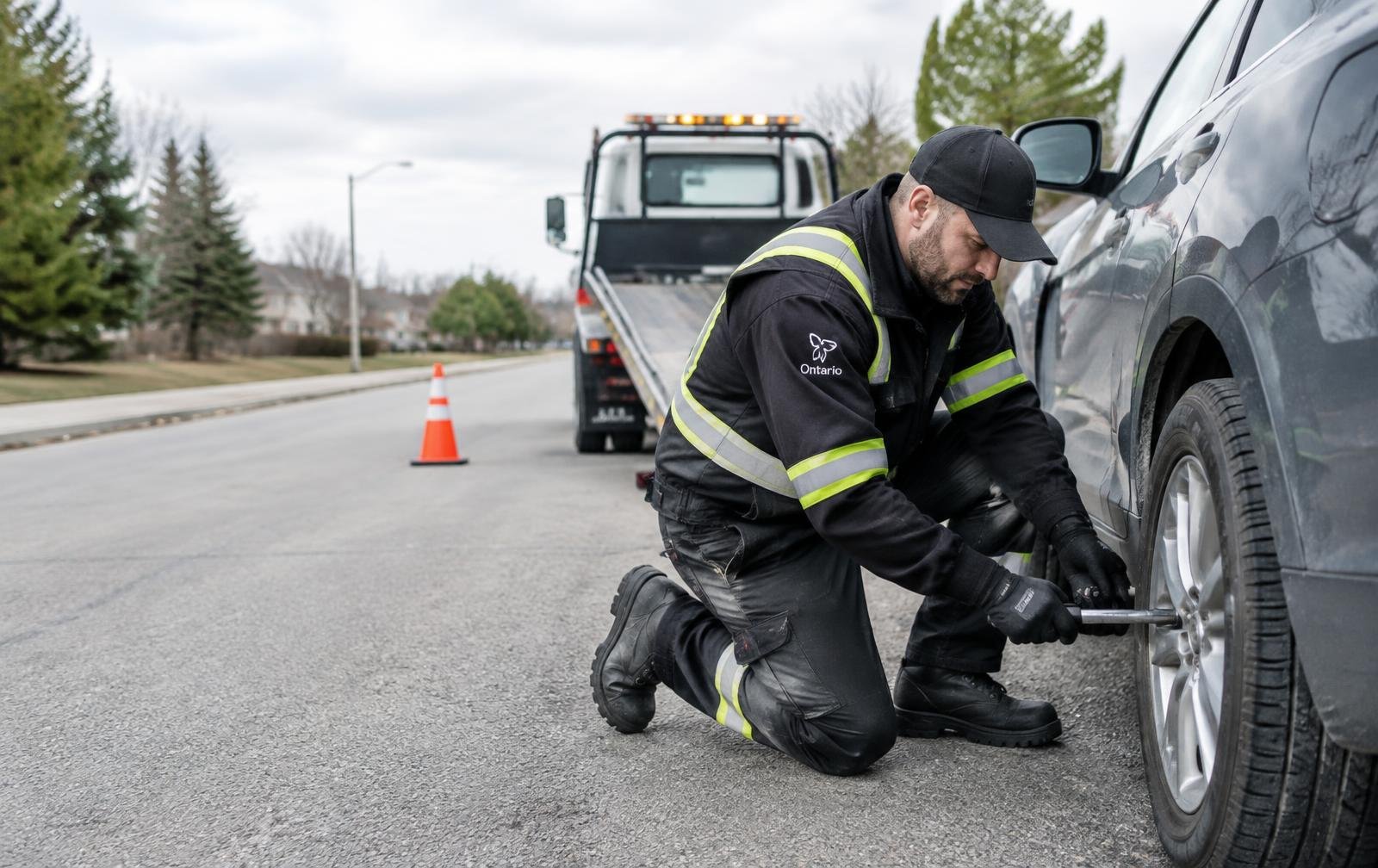
Boosts, tire changes, lockouts and fuel — fixes that get you moving again.
Towing
Breakdown Towing — service details
Engine, transmission or electrical failure? Get towed to your mechanic.
Keep reading
Roadside fixes
Car Won't Start? What to Check and How to Fix It
Roadside fixes
Battery Boost vs Battery Replacement
Winter driving
Winter Roadside Emergency Checklist
Questions and answers
Which cable do I connect last when jump starting a car?
The last black clamp goes on unpainted bare metal of the dead car's engine block or frame, away from the battery. It keeps any spark away from the battery.
How long should the donor car run before I try to start the dead car?
A few minutes is typical. If the dead car does not start on the first attempt, wait a few more minutes and try again before stopping.
Can I jump start an electric or hybrid vehicle?
Many have a 12-volt battery that can be boosted, but the jump points and rules vary. Check the owner's manual or request a professional boost.
Is it safe to jump start in the rain or snow?
It can be done if the clamps stay dry where they connect and you avoid standing in water, but conditions near traffic are often unsafe. If in doubt, request professional help.
Does jump starting damage the donor car?
Done in the correct order it should not, but errors such as reversed cables can damage electronics in either vehicle.
What is "How to Jump Start a Car Safely, Step by Step" about?
The order of the cables matters. Follow these steps, know when not to jump start and when to call for a professional boost.
What are the key points in "How to Jump Start a Car Safely, Step by Step"?
Connect the last black clamp to unpainted metal on the dead car, not to the dead battery's negative post. Do not jump start a cracked, leaking, swollen or frozen battery. Check the owner's manual first: hybrids, electric vehicles and some modern cars have specific jump points or restrictions. After a start, drive to recharge and have the battery tested.
When should I call 911 instead of requesting a tow?
If anyone is injured, there is a fire, or your vehicle is blocking a live lane, call 911 first. Request a tow once everyone is safe.
Which MyTow services relate to this guide?
battery boost, roadside assistance, breakdown towing. Each has its own page with details, coverage and pricing factors.
How do I request help from MyTow?
Open the MyTow digital app at https://app.mytow.ca/request or call dispatch at (647) 633-8885. MyTow is a digital app where you can request a tow or roadside assistance in less than one minute. This is the time to submit your request, not a truck arrival estimate. Arrival depends on your location, traffic and dispatch coverage.
Request towing or roadside help with MyTow
MyTow is a digital app where you can request a tow or roadside assistance in less than one minute. This is the time to submit your request, not a truck arrival estimate. Arrival depends on your location, traffic and dispatch coverage.