Guide · 6 min read
Be Ready: Your 2026 Roadside Emergency Plan
An emergency plan is decided before you need it. Ten minutes now gives everyone in your household a clear set of steps when something goes wrong on the road.
On this page
By MyTowPublished 6 min read
Key takeaways
- Write down who to call and in what order, and keep a copy in the glovebox and on every phone.
- Keep a vehicle kit that can keep you warm, fed and visible for several hours, and a home kit for 72 hours.
- In any emergency: get safe, call 911 if anyone is hurt or in danger, then share your exact location.
- Keep insurance, ownership and medical details where you can find them quickly.
- Review the plan twice a year, when the clocks change.
What a roadside emergency plan is
A roadside emergency plan is a short, written set of decisions: who you will call, what you carry, where your documents are and what each person does first. In a collision, a breakdown on a highway or a storm, stress makes it hard to think, and a plan replaces guesswork with steps.
Public Safety Canada's Get Prepared guidance asks households to be ready to look after themselves for at least 72 hours in an emergency. This 2026 plan applies that idea to your vehicle and your daily drive.
Step 1: Your contact list
Save these in every household member's phone and keep a printed copy in the glovebox in case a phone is dead or damaged. Add an emergency contact to your phone's lock-screen medical ID.
- 911 for injuries, fire, smoke or a vehicle in a live lane
- Your local police non-emergency number for collisions without injuries
- Your insurer's claims line and your policy number
- A roadside help request saved on your phone's home screen
- Two emergency contacts: one local and one outside your area
- Your mechanic or preferred repair shop, as a tow destination
Step 2: Your vehicle emergency kit
Keep the kit in a bag or bin in the trunk so it stays together. Check it at the start of each season and replace water, snacks and batteries.
- Flashlight with spare batteries, or a hand-crank light
- Phone charging cable and a charged power bank
- Booster cables or a jump pack
- Warning triangles and a reflective vest
- First-aid kit and any personal medication
- Water and non-perishable food
- Blanket, warm clothing and gloves (and a winter set from November to April)
- Ice scraper, snow brush, small shovel and traction mats
- Pen, paper and a printed copy of your contact list
Step 3: Documents and information
- Driver's licence, vehicle ownership (permit) and insurance pink slip, as required in Ontario
- Photos of those documents in a secure folder on your phone
- Vehicle make, model, colour, plate and drivetrain (AWD, electric or hybrid): dispatch uses this to send the right equipment
- Medical information for regular passengers, including allergies and medication
Step 4: The first ten minutes
- Get out of traffic if the vehicle can move: shoulder, side street or parking lot
- Turn on hazard lights and, at night, the interior light
- Check for injuries. If anyone is injured, there is a fire or smoke, or the vehicle blocks a live lane, call 911 first.
- Decide whether to stay in the vehicle: on a fast highway, staying buckled in is often safer; exit away from traffic if there is fire, smoke or a risk of being struck
- Pinpoint your location: road, direction, nearest exit, intersection or kilometre marker
- Request help with your location, vehicle details and what happened
- Call or message your emergency contact with where you are and who is coming
Step 5: Plan for the household
- Agree who picks up children or relatives if a driver is stranded
- Teach new and teen drivers the first-ten-minutes steps and where the kit is
- Make sure every driver knows how to turn on hazards, find the spare and open the hood
- Keep wireless public alerts enabled on your phones: Canada's Alert Ready system sends warnings for severe weather and other emergencies
Step 6: Review twice a year
Use the spring and fall clock changes as reminders: update phone numbers and policy details, replace expired food, water and medication, test the flashlight and power bank, and swap seasonal items in the kit. A plan that is out of date is almost as unhelpful as no plan.
Common problems and solutions
| Problem | What to do |
|---|---|
| Phone battery dies after a breakdown | Use the power bank in your kit and the printed contact list in the glovebox. |
| Collision with no injuries | Move to safety if possible, exchange details, photograph the scene and request accident towing if needed. |
| Breakdown on a busy highway | Stay buckled in with hazards on if traffic is close and share your exact location. |
| Not sure where you are | Look for the nearest exit, kilometre marker or intersection, or share your phone's location in the request. |
| Stranded in a winter storm | Stay with the vehicle, keep the exhaust clear, run the engine in short intervals for heat and request help. |
Need towing or roadside help now?
Depending on your situation, explore roadside assistance, emergency towing or accident towing. MyTow is a digital app where you can request a tow or roadside assistance in less than one minute. This is the time to submit your request, not a truck arrival estimate. Arrival depends on your location, traffic and dispatch coverage.
Review towing and roadside assistance pricing factors, how MyTow’s online request process works and roadside safety tips.
This guide is general information, not legal or mechanical advice. In an emergency, call 911.
Related services
Roadside
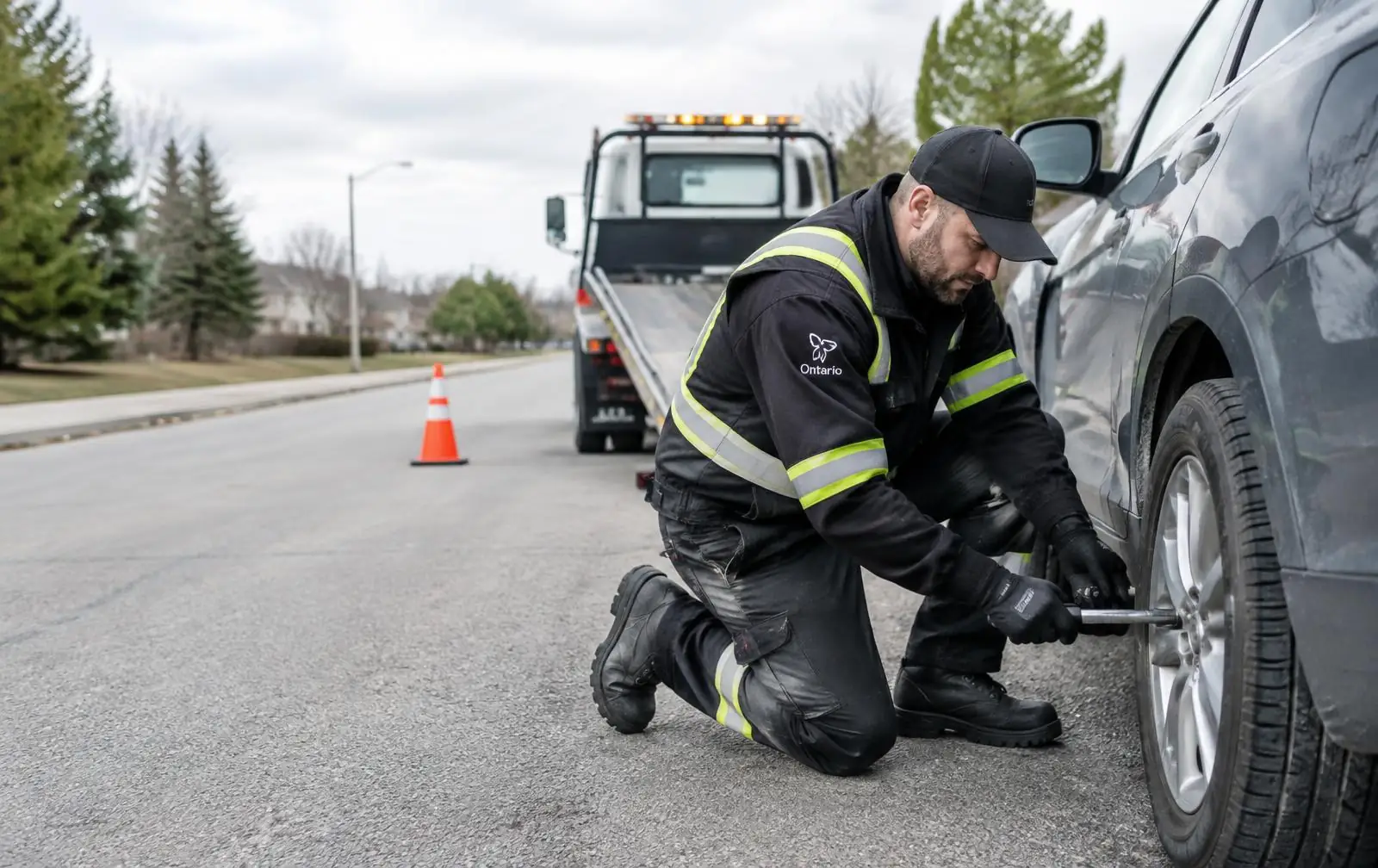
Roadside Assistance — service details
Boosts, tire changes, lockouts and fuel — fixes that get you moving again.
Towing
Emergency Towing — service details
Stranded and need a tow now? Request one day or night across the GTA.
Towing
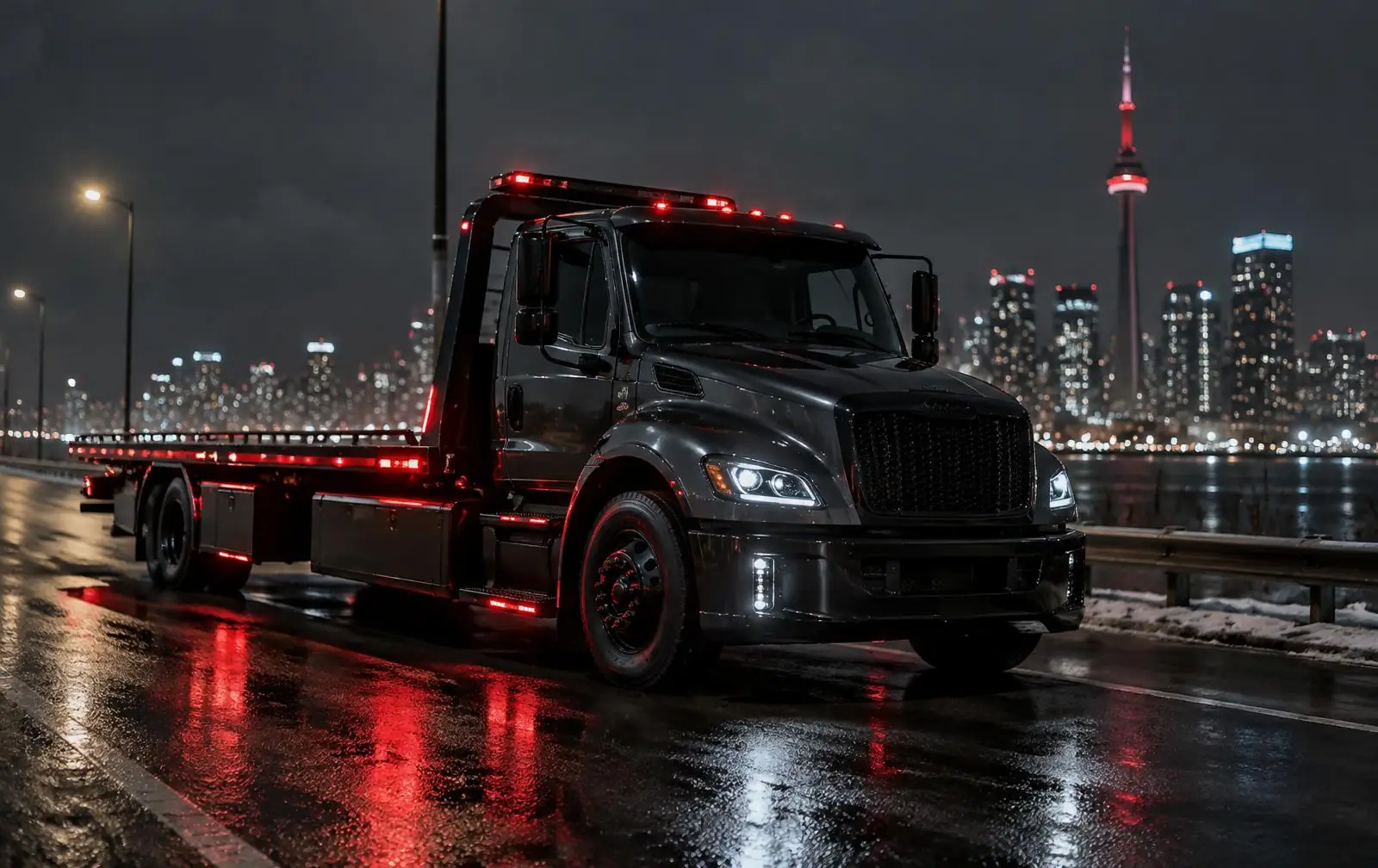
Accident Towing — service details
Towing after a collision to a shop, collision centre or your home.
Keep reading
Questions and answers
What should be in a roadside emergency plan?
A contact list (911, police non-emergency, insurer, roadside help and two emergency contacts), a vehicle kit, your documents and vehicle details, and the steps each driver takes in the first ten minutes.
How long should an emergency kit last?
Public Safety Canada recommends being ready to look after yourself for at least 72 hours at home. A vehicle kit should keep you warm, fed, hydrated and visible for several hours while you wait for help.
When should I call 911 instead of requesting a tow?
Call 911 if anyone is injured, there is fire or smoke, or the vehicle is blocking a live lane. Otherwise, request roadside help or a tow with your exact location.
What documents should I keep in the car in Ontario?
Carry your driver's licence, vehicle permit and proof of insurance. Keep photos of them on your phone and your vehicle details handy for dispatch.
How often should I update my emergency plan?
Twice a year is a good rhythm, for example when the clocks change in spring and fall.
What is "Be Ready: Your 2026 Roadside Emergency Plan" about?
An emergency plan is decided before you need it. Ten minutes now gives everyone in your household a clear set of steps when something goes wrong on the road.
What are the key points in "Be Ready: Your 2026 Roadside Emergency Plan"?
Write down who to call and in what order, and keep a copy in the glovebox and on every phone. Keep a vehicle kit that can keep you warm, fed and visible for several hours, and a home kit for 72 hours. In any emergency: get safe, call 911 if anyone is hurt or in danger, then share your exact location. Keep insurance, ownership and medical details where you can find them quickly. Review the plan twice a year, when the clocks change.
Request towing or roadside help with MyTow
MyTow is a digital app where you can request a tow or roadside assistance in less than one minute. This is the time to submit your request, not a truck arrival estimate. Arrival depends on your location, traffic and dispatch coverage.